If you own a home or land, getting a notice about eminent domain can feel overwhelming. Suddenly, you’re faced with words like “property damage,” “just compensation,” and “government taking.” What does eminent domain property damage really mean for you? In this guide, you’ll learn what counts as property damage in eminent domain, your rights as an owner, and practical next steps you can take to protect your interests.
What Is Eminent Domain Property Damage?
Eminent domain is the government’s power to take private property for public use, but they have to pay you fair compensation. Property damage in eminent domain goes beyond just losing your land. It can include any negative impact on your remaining property after the part taken is gone. This might cover things like loss of access, reduced value, or even changes that affect how you use your home or business.
When the government takes a piece of your property for a road expansion, for example, you might also lose part of your driveway or see your backyard shrink. Sometimes, construction can damage buildings or landscaping that the government didn’t intend to take. All of these fall under eminent domain property damage.
Types of Property Damage in Eminent Domain Cases
Property damage from eminent domain can show up in several ways. It helps to know what kinds of harm are most common so you can spot them if they happen to you.
- Direct physical damage
If construction crews accidentally crack your foundation or damage your fence, that’s direct physical damage. This type is usually easy to see and document.
- Loss of access
Maybe you can’t reach your business from the main road anymore, or a driveway becomes unusable. Reduced or lost access can seriously hurt property value.
- Change in property value
Sometimes, the government only takes a strip of land, but the rest of your property becomes less valuable. Maybe a noisy highway goes in next door, or a beautiful view is blocked. This decrease in value counts as property damage.
- Interference with utilities or drainage
If a project changes water flow, damages pipes, or interrupts your utilities, it can cause long-term issues. Even if the main part of your land is untouched, these problems still count.
- Temporary damage during construction
Sometimes, workers need to use your property for equipment or storage. Even if it’s temporary, this use can lead to damage or loss of use for a period.
Not every impact will qualify for extra compensation. The difference comes down to how the law defines “damages” in your state and the specifics of your case.
Your Rights as a Property Owner
The U.S. Constitution says you must get “just compensation” if the government takes your property. But what does that mean when it comes to property damage?
You have the right to:
- Receive payment for the property actually taken.
- Get compensation for any decrease in value to the part you keep (often called “severance damages”).
- Challenge the amount offered if you think it’s too low.
- Present evidence about the extent of the damage, both direct and indirect.
- Hire your own appraisers or experts to value your loss.
Many people don’t realize they can ask for damages beyond the land directly taken. If you’re left with a property that’s worth less or harder to use, you may be owed more than the first offer.
The Eminent Domain Process: What Happens Next?
If you’ve received a notice or offer from the government, what should you expect? Here’s a simple overview of the steps most property owners face:
- Notice
You’ll get a formal letter explaining what land is needed and why. Sometimes, this comes after informal talks.
- Appraisal
The government will send an appraiser to estimate the value of your property. They may not consider all the ways you’re affected.
- Offer
You’ll get a written offer for your land and, sometimes, for property damage. This is often negotiable.
- Negotiation
You can respond, ask questions, and present your own evidence. Many people accept the first offer, but you don’t have to.
- Condemnation lawsuit
If you and the government can’t agree, they may file a court case. This doesn’t mean you did anything wrong. It’s just the legal process to settle the value and damage.
- Hearing and payment
A judge or jury decides the final amount. You’ll get paid the court’s award, though you can still appeal in some cases.
At every step, you have the right to understand what’s happening and to challenge anything that seems unfair.
How Compensation for Property Damage Is Calculated
Getting fair compensation for eminent domain property damage can be tricky. The government usually calculates the value of the land taken, but damage to the “remainder” property is sometimes overlooked or underestimated.
Appraisers use several factors to decide how much you’re owed:
- The fair market value of the land or part taken.
- How much the rest of your property drops in value because of the project.
- The cost to repair or restore physical damage.
- Lost income if you run a business on the property.
- Temporary losses if construction blocks access or use.
Let’s say the city takes a strip of your land for a new sidewalk. If your front yard shrinks and your house gets closer to the street, buyers may pay less for your home in the future. That loss in value should be included in your compensation.
Not all damage is obvious. Sometimes, you’ll need an independent appraiser or expert to spot the full impact. Keep detailed notes, photos, and records of any changes or problems that pop up as the project moves forward.
Common Questions About Eminent Domain Property Damage
Ever wondered what to do if you disagree with the government’s offer? Or what happens if you find damage months after the project ends? Here are answers to some of the most common questions people ask:
Can I refuse the government’s offer?
Yes. You’re not required to accept the first offer. You can negotiate, present your own evidence, or even ask a court to decide.
What if the damage isn’t obvious until later?
Sometimes, cracks or drainage issues show up months after construction. If you can prove the damage was caused by the project, you may still have a claim. Deadlines vary by state, so don’t wait to speak up.
Do I need a lawyer or expert?
You’re not required to hire anyone, but many property owners find it helpful. Experts can spot damages you might miss and help you get a fairer deal.
Will fighting for more compensation delay my payment?
It’s possible, especially if the case goes to court. In some states, you can get at least part of the payment up front while you negotiate the rest.
What about damage to rental or commercial properties?
Business owners and landlords can often claim lost income, higher costs, or lower property value as part of their damages. The rules can be more complex, so it’s a good idea to get expert help.
Practical Next Steps for Property Owners
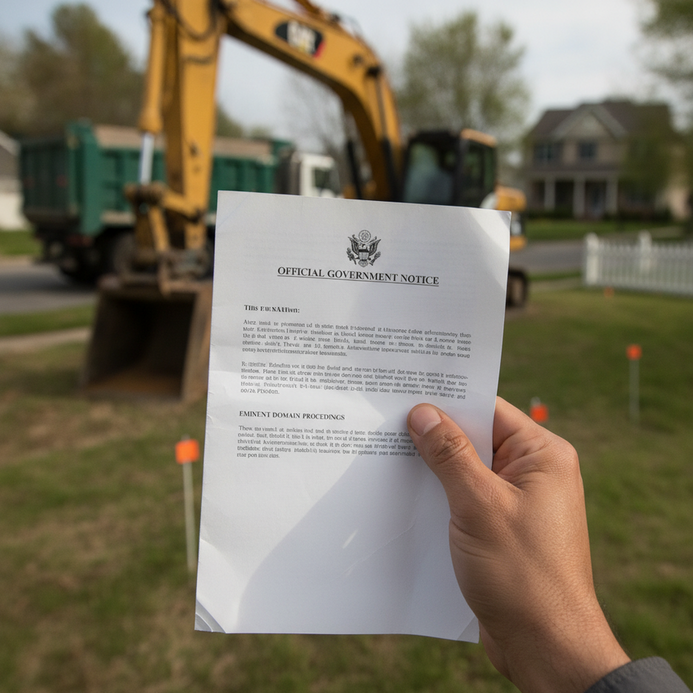
If you think your property is at risk for eminent domain property damage, here’s what you can do right now:
- Read every notice and letter carefully. Don’t ignore deadlines.
- Take photos and notes about your property before, during, and after any government work.
- Keep records of lost income, repairs, or any changes to your land or buildings.
- Ask questions if anything is unclear. The government must explain its process.
- Consider contacting an independent appraiser or expert to get a second opinion.
- Don’t sign anything until you understand your rights and the full impact.
If you’re unsure what to do next, you’re not alone. Many property owners feel lost at first. That’s why sites like eminentdomain.help exist, to point you in the right direction and connect you with more detailed resources.
[[IMAGE: A close-up of a homeowner’s hand holding a government notice about eminent domain, with a slightly blurred background showing construction vehicles and survey stakes. The tone is anxious but resolute. “]]
Conclusion
Eminent domain property damage isn’t just about the land taken, it’s about how the changes affect your life, your property, and your future. Understanding your rights and documenting every detail puts you in a stronger position to get fair compensation. If you have questions or think your property might be affected, contact us to learn more.